
By Michael Szerencsy
Most word games make you take turns. OUTLIER does not have to: everyone in the world already gets the same grid on the same day, so a challenge is not a separate mode, it is a link that says look at what I got. Send one, and every day you both play from then on quietly becomes a record.
Sending one
Lock today's board first. That is the only requirement, and it is the whole design: a challenge carries your score, so there has to be a score to carry.
The link is short, and it is the same link every time you press the button today. Clicking twice does not make a second challenge, it hands you the one you already have, so there is never a question about which link your friends are on.
What the other person sees
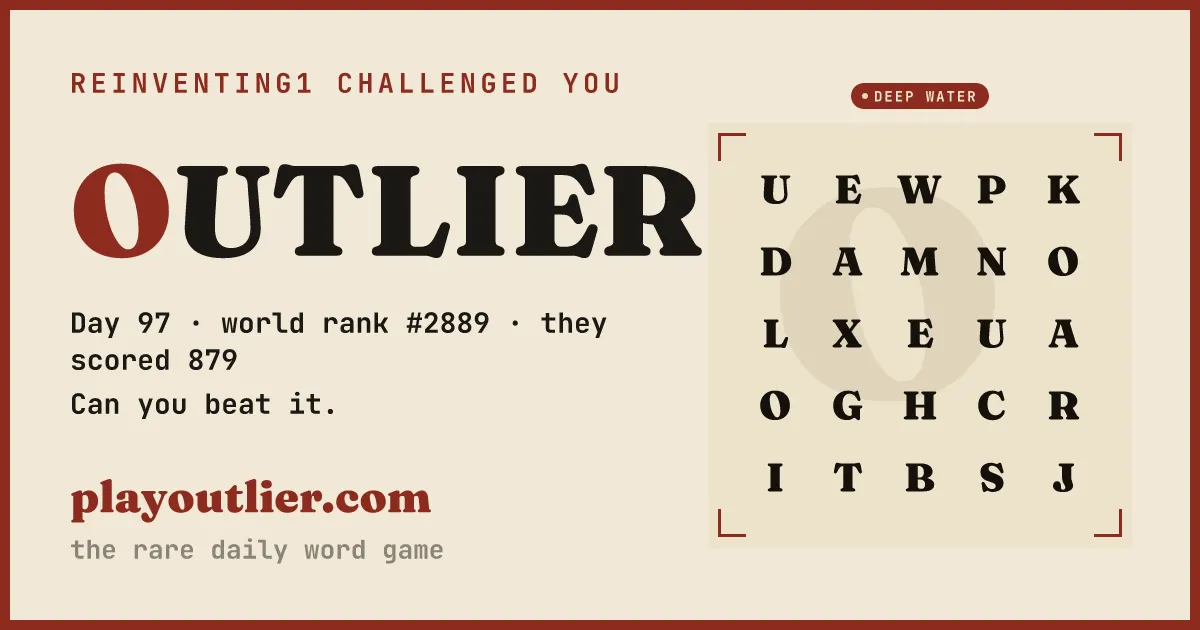
Somebody who has never played OUTLIER goes straight to the board with your score sitting on it as the number to beat. They do not land on a signup wall or a stranger's stats page, because the fastest way to explain this game is to let somebody play it.
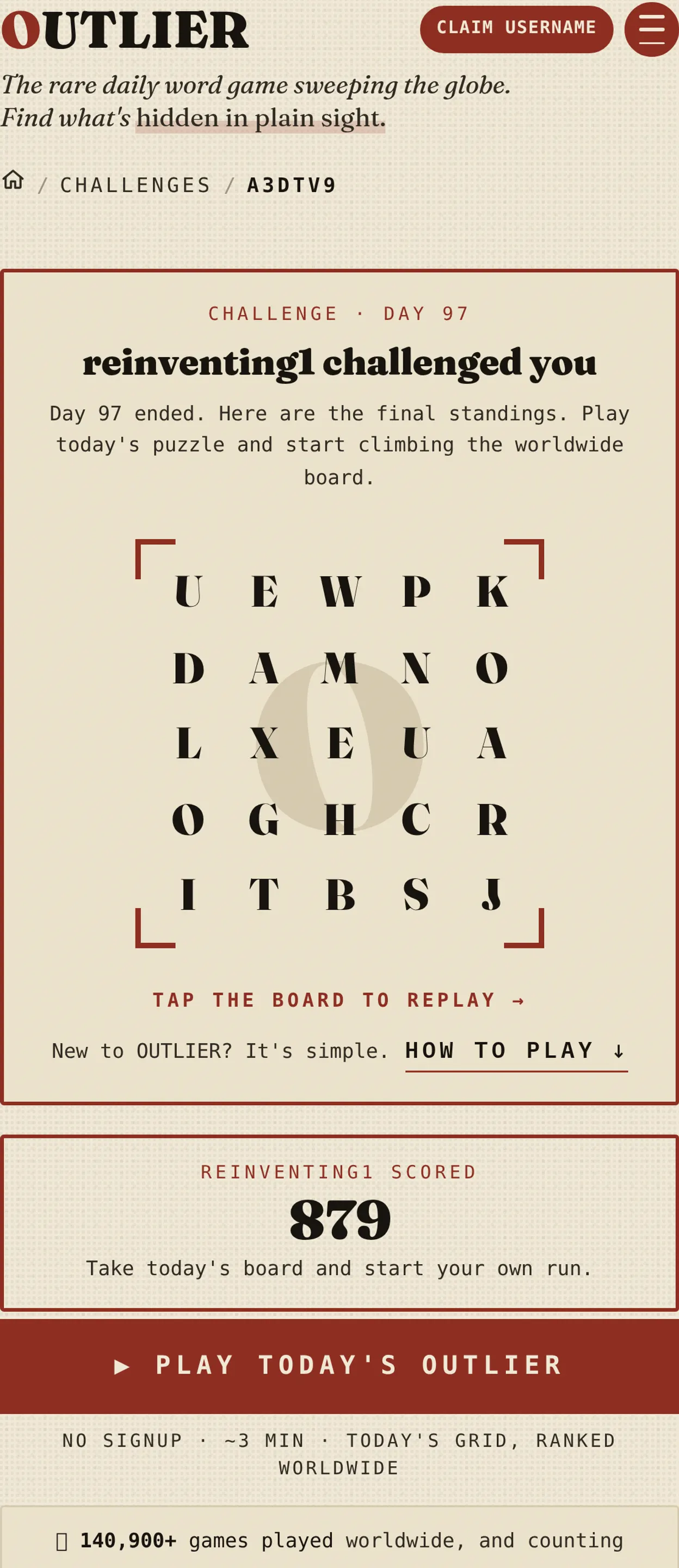
Somebody who already plays lands on the challenge itself: the board, who has joined, and where everyone stands.
The head-to-head record, and how it is computed
This is the part people ask about most, and the answer is more honest than they expect: nothing about your record is stored.
A challenge seeds a rivalry between two people. From then on the record is DERIVED, every time it is shown, from the days you both locked a score. Higher score takes the day. Ties share it. Nothing is written down, which means nothing can drift, and a corrected score corrects the record with it.
It also means a rivalry needs no second challenge to keep going. One link, once, and every shared board after it counts.
Your challenges page
The challenges page is the record room. It opens on your all-time total across everyone, then the per-person tables under it.
The removal rule is worth stating plainly because it is the one people worry about. Hiding is per viewer. The other person's record is untouched, their view of you is untouched, and nothing you have played is deleted.
What a challenge never reveals
The same rule that governs the rest of the game applies here, and it is the reason challenges can be live at all: a score never leaks a word.
The card carries a name, a day and a number. The standings carry names and scores. Neither carries a word, a letter, a rarity or a tier, while the board is open or after it settles. You can watch somebody beat you by forty points all morning and learn nothing about how.
Challenge pages are noindex, so none of it is searchable, and the link is the authorisation: unguessable, and it stops mattering once the day settles.
Getting the most out of it
The best challenges are with people who play anyway. A challenge to somebody who will not come back is one link and one day; a challenge to somebody already in the habit is a record that compounds for months.
Send it after a good day, not a bad one. Your score rides on the card, and a number worth beating is what makes somebody tap.
And follow the people you challenge. Joining does it for you, but if you are the one sending, the follow is what turns a one-off into an Orbit that shows you their score every morning without either of you doing anything.
Play today's Set, lock it, and the challenge button is right there on the result.