
By Michael Szerencsy
Wordle did something rare. It turned one five minute puzzle into a daily ritual for millions of people, then sent every one of them looking for the next thing to play at breakfast. This is a tour of what is actually out there: the families the genre splits into, the specific games worth keeping, and how to build a rotation that survives a month. It ends with the one thing almost none of them do, which is the game I build, so read that part knowing where it comes from. Everything before it is written to be useful whether or not you ever play mine.
Why one Wordle is never enough
The genius of the format is the stopping point. One puzzle, a clear finish, a streak you'd rather not break. That same design is why a single game rarely fills the slot: five good minutes leave you wanting a sixth, and the puzzle is gone until tomorrow.
So the useful question isn't which game is the Wordle killer. It is which handful you keep in rotation, each scratching a slightly different itch, and which one of them is still there in six months.
What actually made Wordle work
Worth naming, because the games worth keeping tend to share the same bones. Everyone got the same puzzle on the same day, so there was something to talk about. It was free and took a minute to explain. The share grid gave you a way to brag without spoiling anything. And it ended, which is rarer than it sounds in a business built on not letting you stop.
Underneath sat a rule simple enough to explain in a sentence and deep enough to argue about over coffee. Trivial to start, hard to master, is the whole trick.
The four families, and what each is for
Almost everything in the genre falls into one of four shapes, and they feel genuinely different to play.
If you only take one thing from this page: pair families, not games. Two deduction puzzles back to back feel like the same five minutes twice.
The specific games worth starting from
Names to begin with, sorted by family. Most are free and play in a browser.
Quordle and Octordle are the multi board deduction variants: four hidden words at once off shared guesses, then eight. The same skill as Wordle with the pressure turned up, and the point at which some people discover they were never really enjoying the pressure.
Connections is the grouping puzzle everyone means when they say grouping puzzle. Sixteen words, four hidden groups, deliberate overlaps designed to catch you. Strands is its gentler cousin, a themed hunt that ties every answer back to one secret idea.
Spelling Bee is the letter honeycomb: seven letters, one required, as many words as you can build. Waffle hands you a scrambled grid to swap into shape. Both are hunts rather than deductions, and both reward vocabulary over logic.
Contexto and Semantle are the proximity games. You guess, and the only feedback is how close in meaning you were. Fascinating, occasionally maddening, and the least respectful of your lunch break.
Phrazle applies the colour clue idea to a whole phrase, which adds spacing and word order to the problem. And the classic word search and word scramble formats are still there, quieter than the rest and better than their reputation.
How to build a rotation you will keep
Variety of FEELING, not variety of game. Pair a fast deduction with a slower discovery hunt, and a quiet one for the days you have nothing left to give.
Mind the time budget. If every game in the stack can run twenty minutes, the ritual becomes a chore and the streaks start breaking on their own.
And let it change. The genre refreshes constantly, and swapping out a game you have outgrown is part of the fun rather than a failure of loyalty.
What every game on this list has in common
What you notice after a few months in the rotation isn't a criticism of any single game on it.
You play alone. You finish, you close the tab, and the only trace is a grid of coloured squares you might paste into a group chat. There's no board. Nobody is ranked. Nothing accumulates. Your best day and your worst day leave the same mark, which is none.
The genre perfected the ritual and left the competition on the table.
That's the gap. Not “these games are too easy”, which is the usual complaint and mostly wrong. The gap is that a whole category of daily games grew up with no scoreboard, no opponents, and no record of you in it.
The one built to fill it: score the rarity, not the answer
OUTLIER is the game I build, and it exists because of the paragraph above. It's a daily letter grid, which puts it in the third family, and then it changes the one rule that everything else follows.
You aren't scored on getting the answer, and barely on how many answers you find, because almost everyone finds all ten. Every word is scored on how RARE it is, from 0 to 100, and your ten finds add up to your day. A word most of the field finds pays around 40. The rarest words on a board pay in the 90s. No single find wins the day on its own, but ten ordinary words and ten rare ones finish hundreds of points apart. Length barely matters: a five letter word can beat a twelve letter one if fewer people saw it.
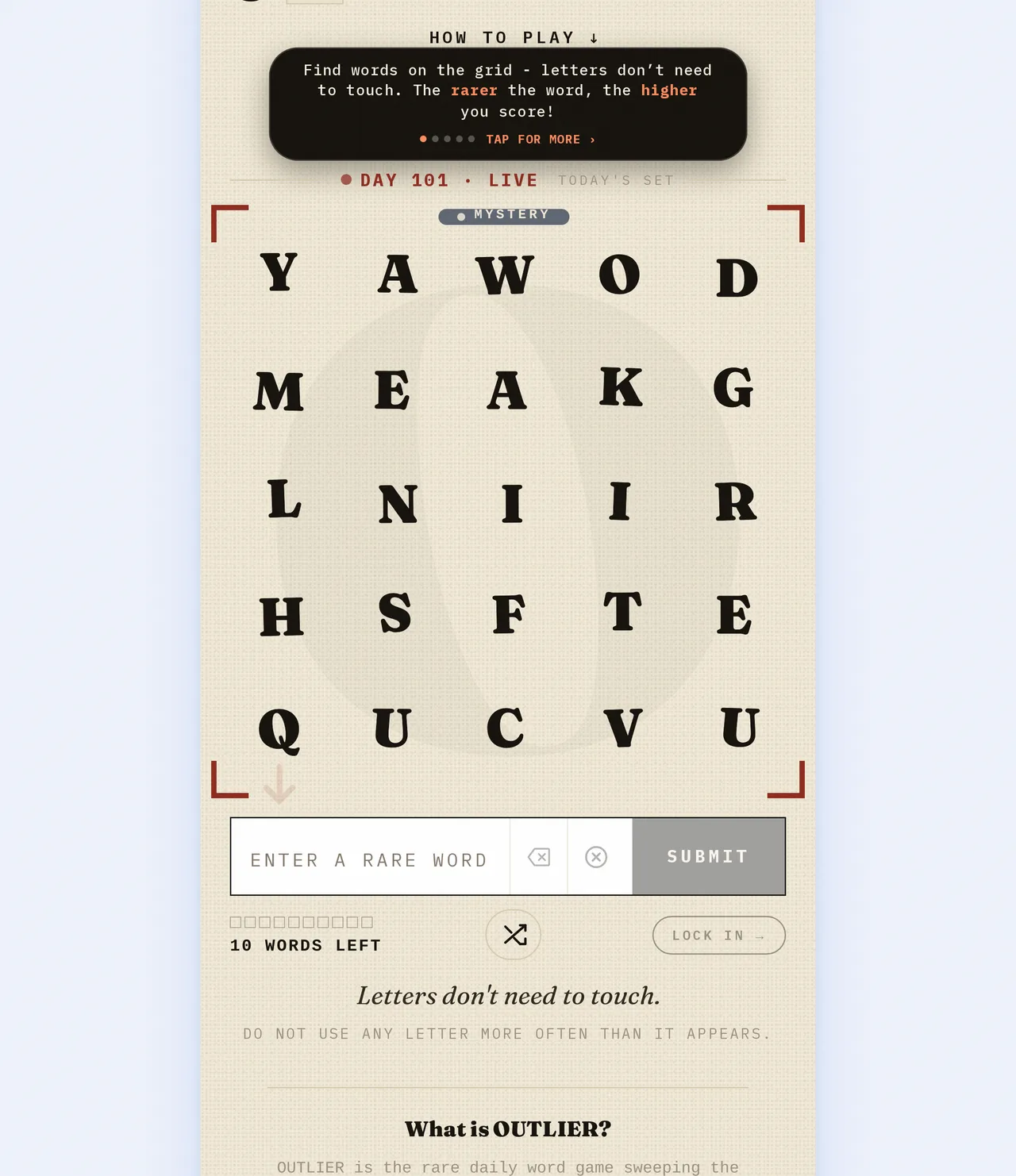
So the skill it trains isn't deduction speed. It's the discipline to walk past the obvious word in the corner and find the strange one underneath it, which is a skill with no ceiling, because there's always a stranger word in the grid.
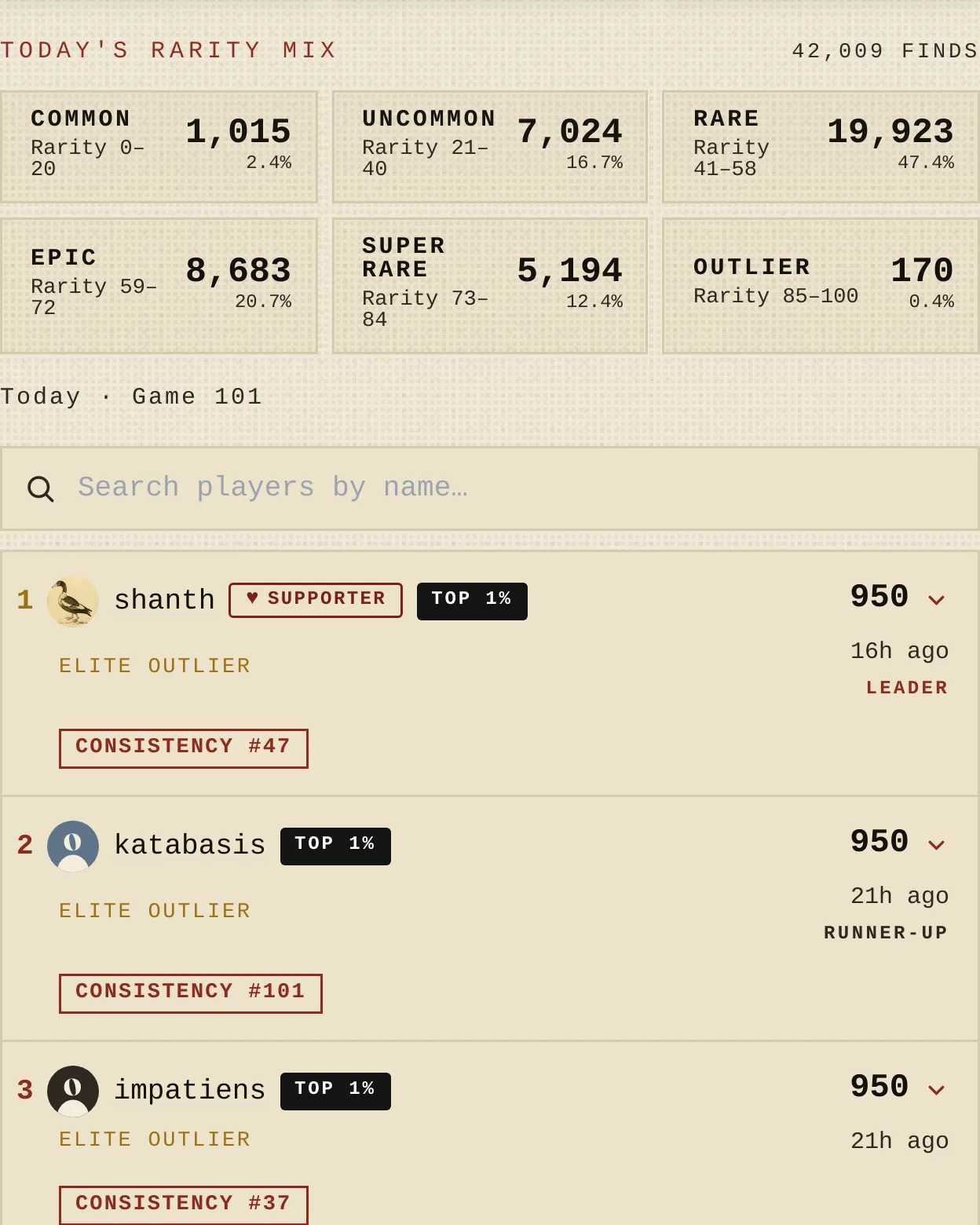
And then the things the genre left out
The rarity rule is the mechanic. These are the parts that answer the gap.
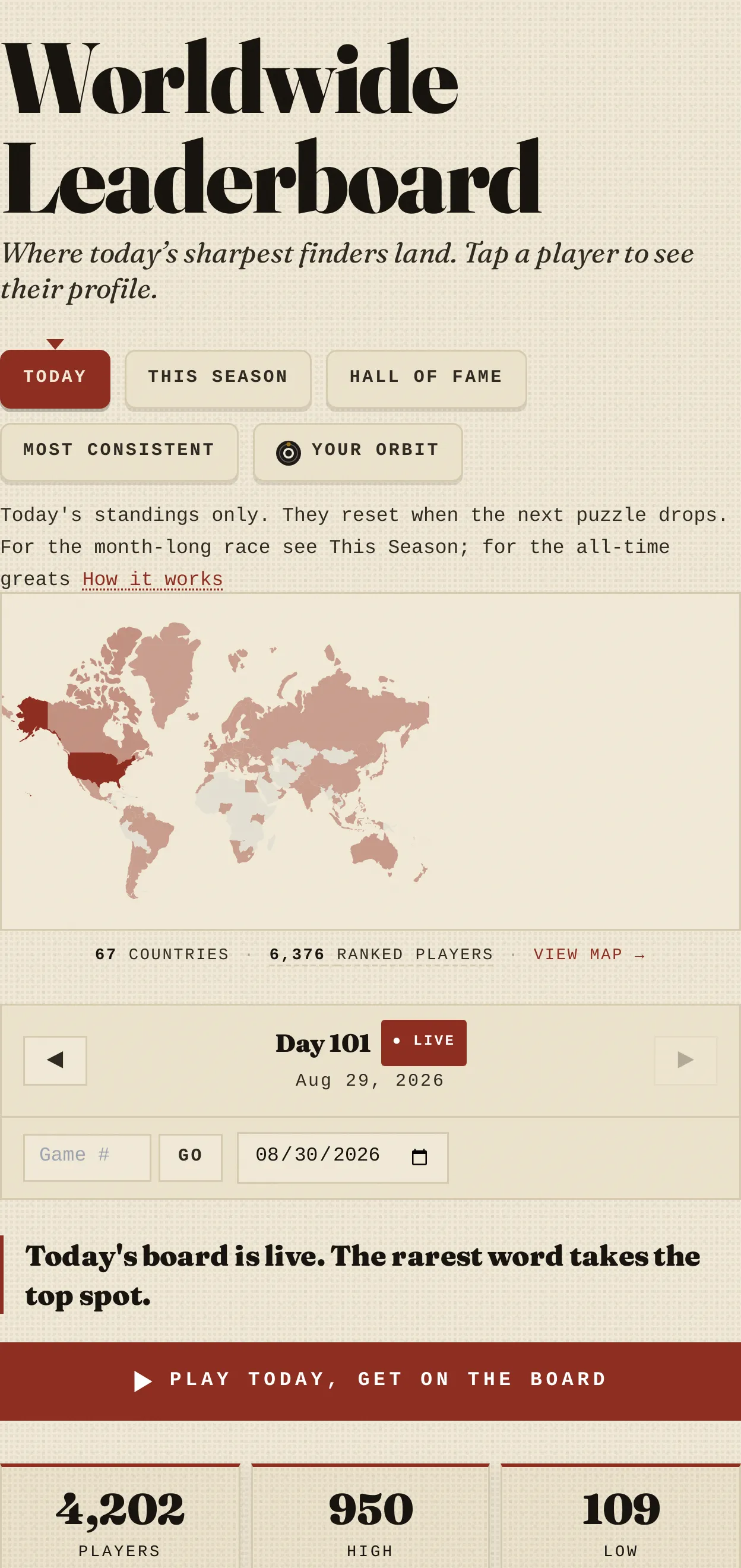
Everyone who played is ranked, every day, publicly. Same grid, same twenty four hours, one list from the top of the world down to you.
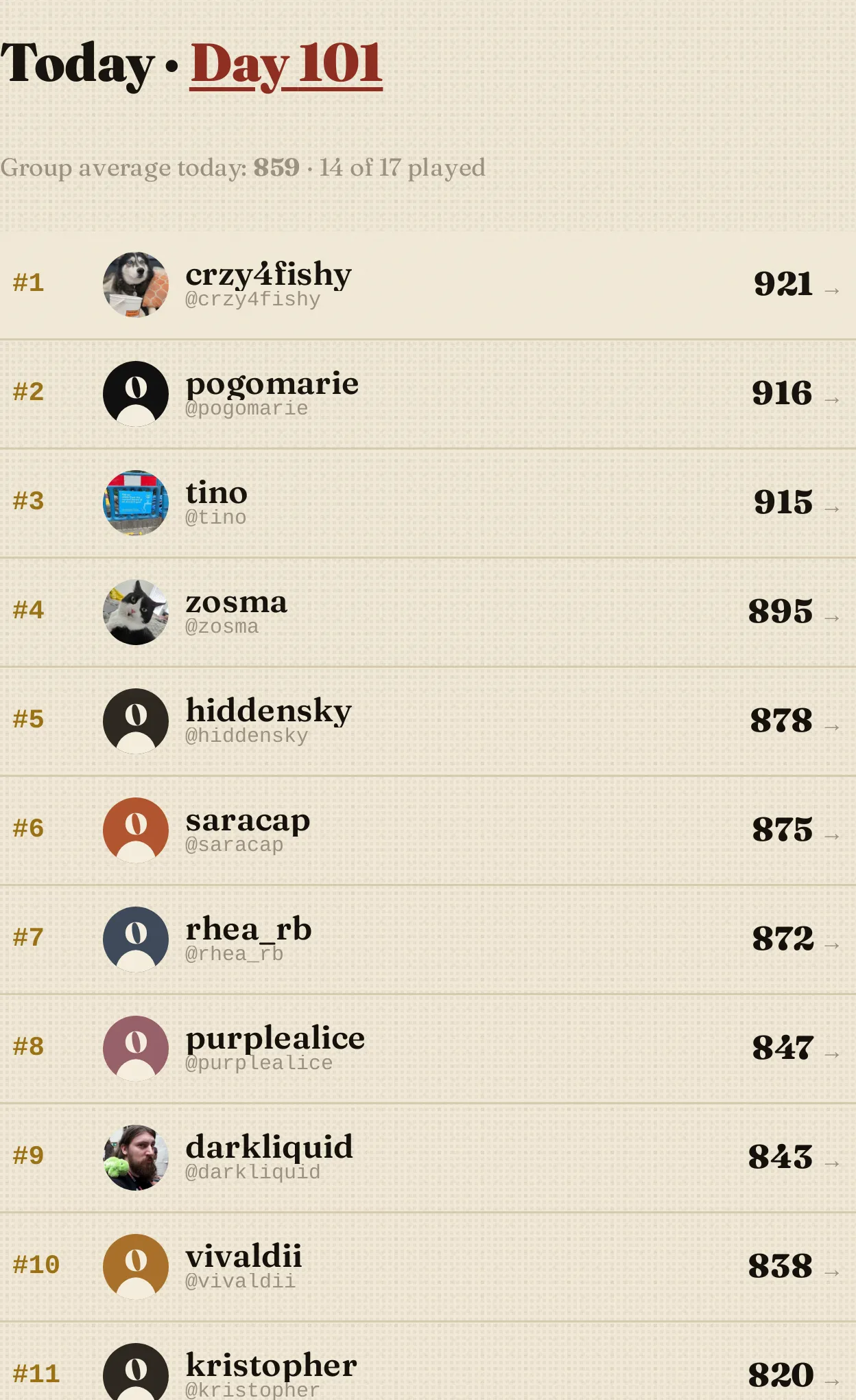
A global rank is blunt on its own, so there's also Orbit: the board of the people you follow, ranked beside you on the same grid, with named Groups inside it for your family, your office, your book club.
A record, and a report on how your mind works
Wordle keeps a streak. This keeps a career: every game you have played, ranked and tiered, the medals you have won, your best day ever, your standing in your own country.
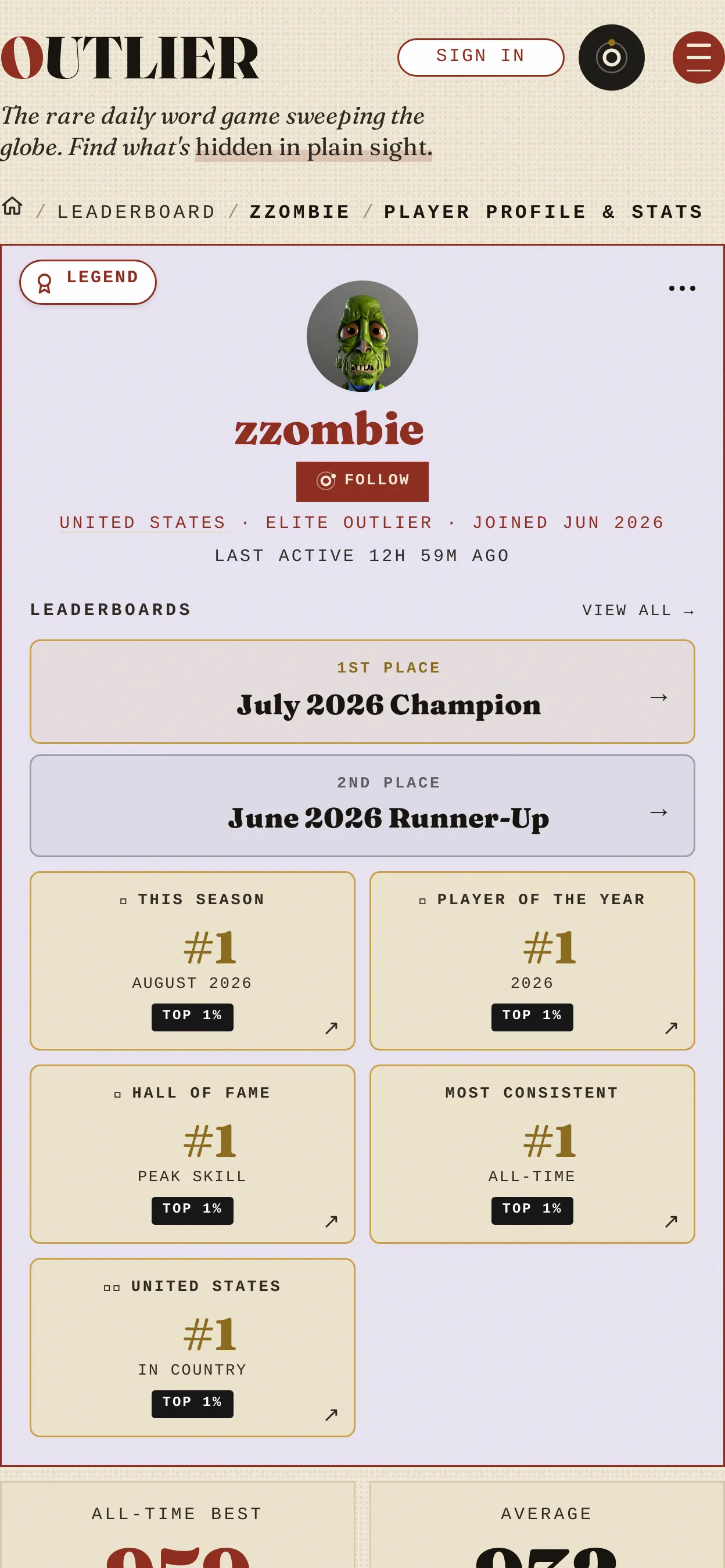
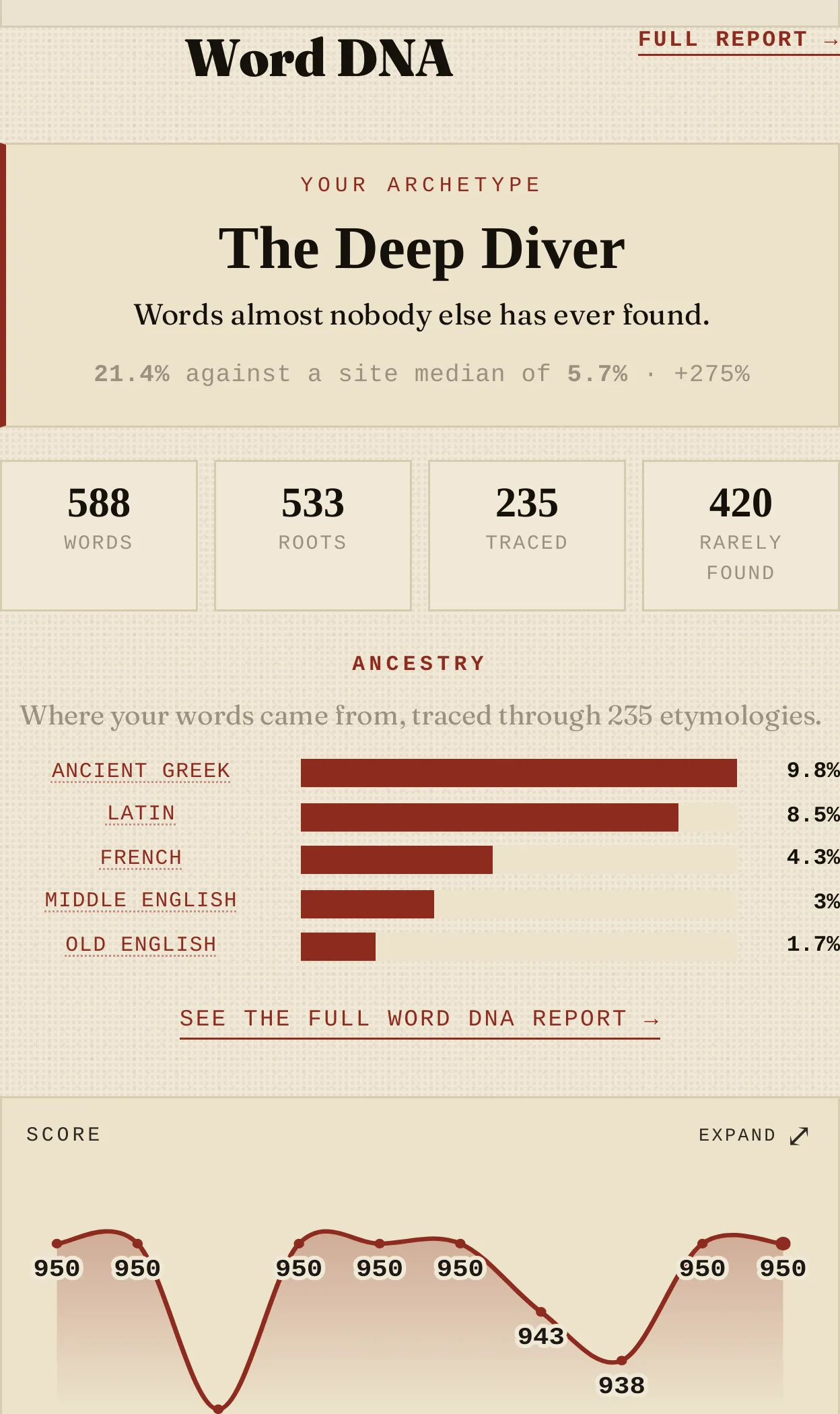
And the part with no equivalent anywhere else in the genre: Word DNA reads every word you have ever found and builds a portrait of how you use language. Not your score, your style. Where your words come from historically, which roots you keep reaching for, how your dictionary compares to everyone else's.
It also teaches you words, without asking you to study
Every word on the board has its own page: definition, pronunciation in IPA, where it came from, how many people have ever found it. When a board ends, the words you found and the ones you missed are all links.
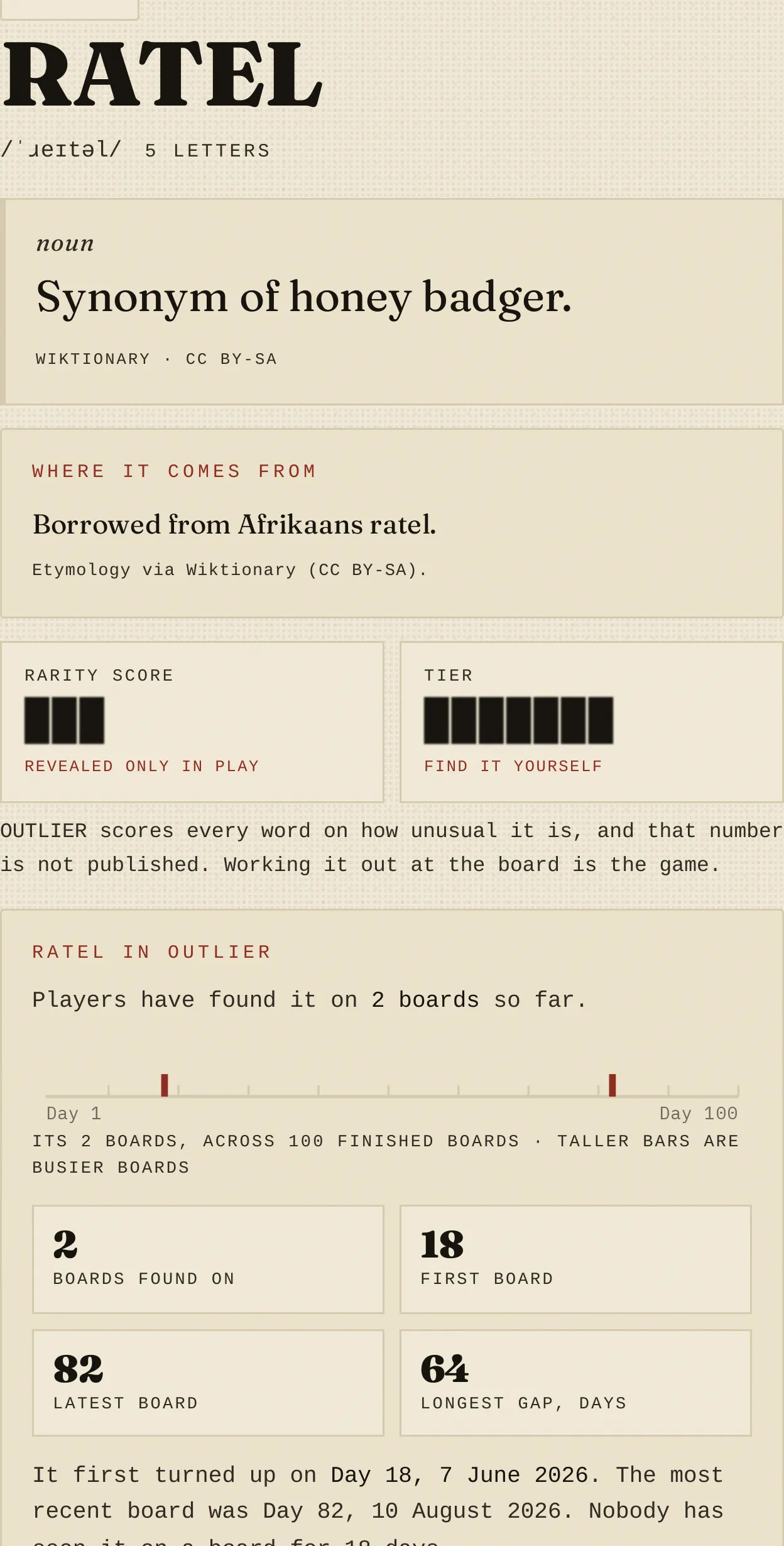
Nobody sets out to learn words here. They set out to beat the person above them on the group board, and the vocabulary arrives as a side effect. That's the whole trick, and it's the answer to the third item on the test at the top of this page.
So what should be in your rotation?
Genuinely: two or three of these, not one. Wordle for the clean deduction, Connections for the pattern itch, and something open ended for the days you want to hunt rather than deduce.
But if the reason you're reading a page called games like Wordle is that you finished today's puzzle in ninety seconds and wanted something with more room in it, or you have ever spotted a clever word and thought that should have counted for something, then the gap this page describes is the one you're feeling.
The grid is live right now, the whole planet is on the same twenty five letters, and it takes about five minutes.